



Ethereum prices have risen more than 13% since December 1st, helped by a broad recovery in the market and growing optimism ahead of today’s Fusaka upgrade, which will improve the efficiency of transaction processing by the network. Although ETH is still down over 17% in the last month, the recent rally and some technical signals are similar to what happened just before the Pectra upgrade in May 2025, when Ethereum rose 56% in 7 days.
The question now is simple: can Fusaka spark such a move again?
sponsored
The situation looks similar with Pectra – and big buyers are coming back
During the Pectra phase (May 6-13), Ethereum surged 56% after exhibiting a standard bullish divergence. This pattern occurs when price forms a low while the RSI (Relative Strength Index, a momentum meter from 0 to 100) forms a higher low. Even if the chart still looks weak, it often indicates that sellers are losing control. This is truly a reversal of the trend.
PS: Pectra upgrade was removed on May 7, 2025.
The same composition is currently taking shape.
Between November 4th and December 1st, ETH made lower lows, while RSI formed higher lows. This accurately reflects the structure that emerged before Pectra moved.
Want more token insights like this? Sign up for Editor Harsh Notariya’s Daily Crypto Newsletter here.
sponsored
Large holders also show early accumulation.
The number of Ethereum addresses holding at least $1 million increased from 13,322 to 13,945, an increase of 4.68%. With a minimum of $1 million stored in each wallet, this reflects at least $623 million in additional capital for the network’s top tier holders. The entry of large buyers ahead of major technology upgrades is historically a positive sign.
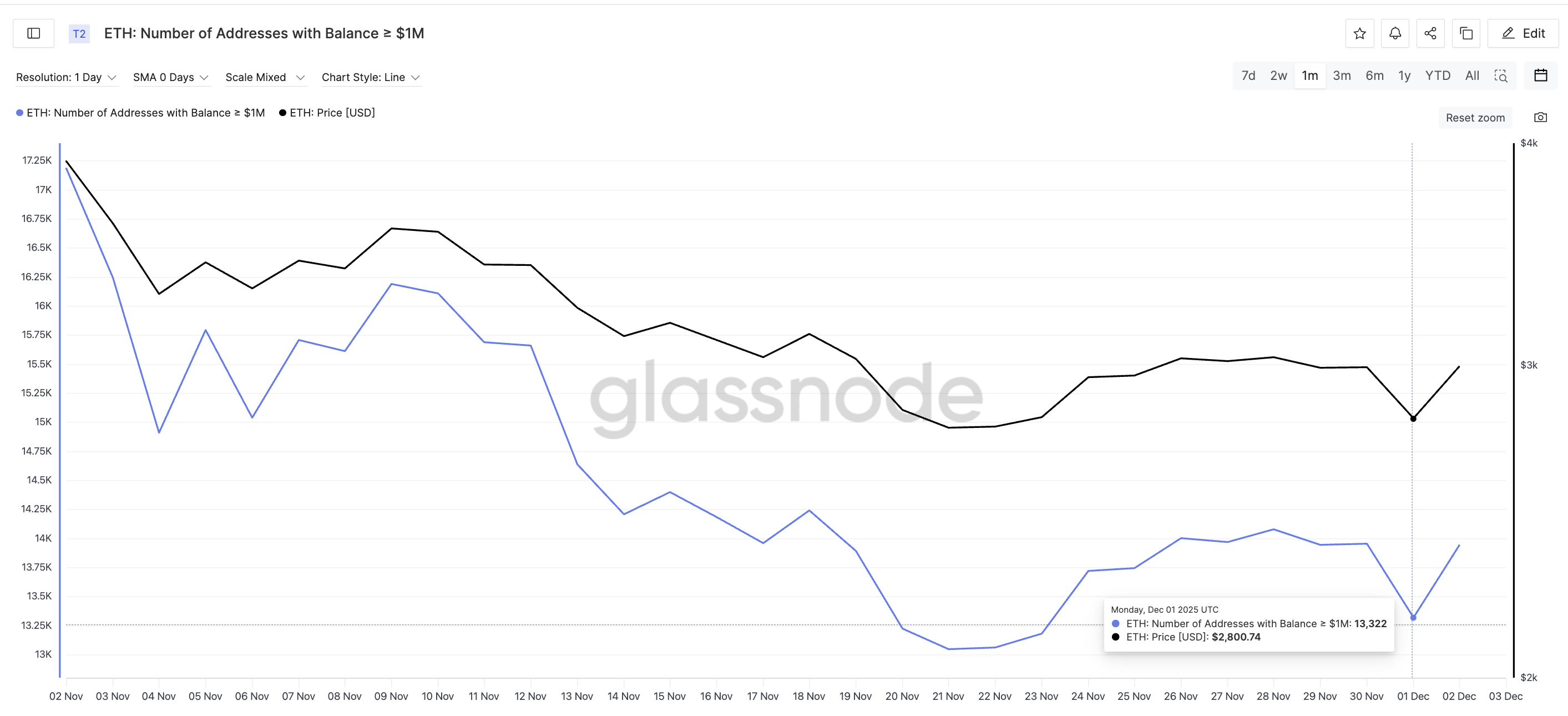
The divergence pattern and the influx of new large wallets, taken together, builds the case that Fusaka could act as a catalyst if it clears a key breakout level.
sponsored
One cost-based cluster and one Ethereum price level determines everything
Whether ETH exhibits Pectra-style expansion depends on clearing a single supply wall. Glassnode’s cost-based distribution reveals the heaviest short-term supply cluster between $3,154 and $3,179, where there is approximately 2.76 million ETH. This is almost perfectly aligned with the chart’s resistance level at $3,166 (strong resistance and support).
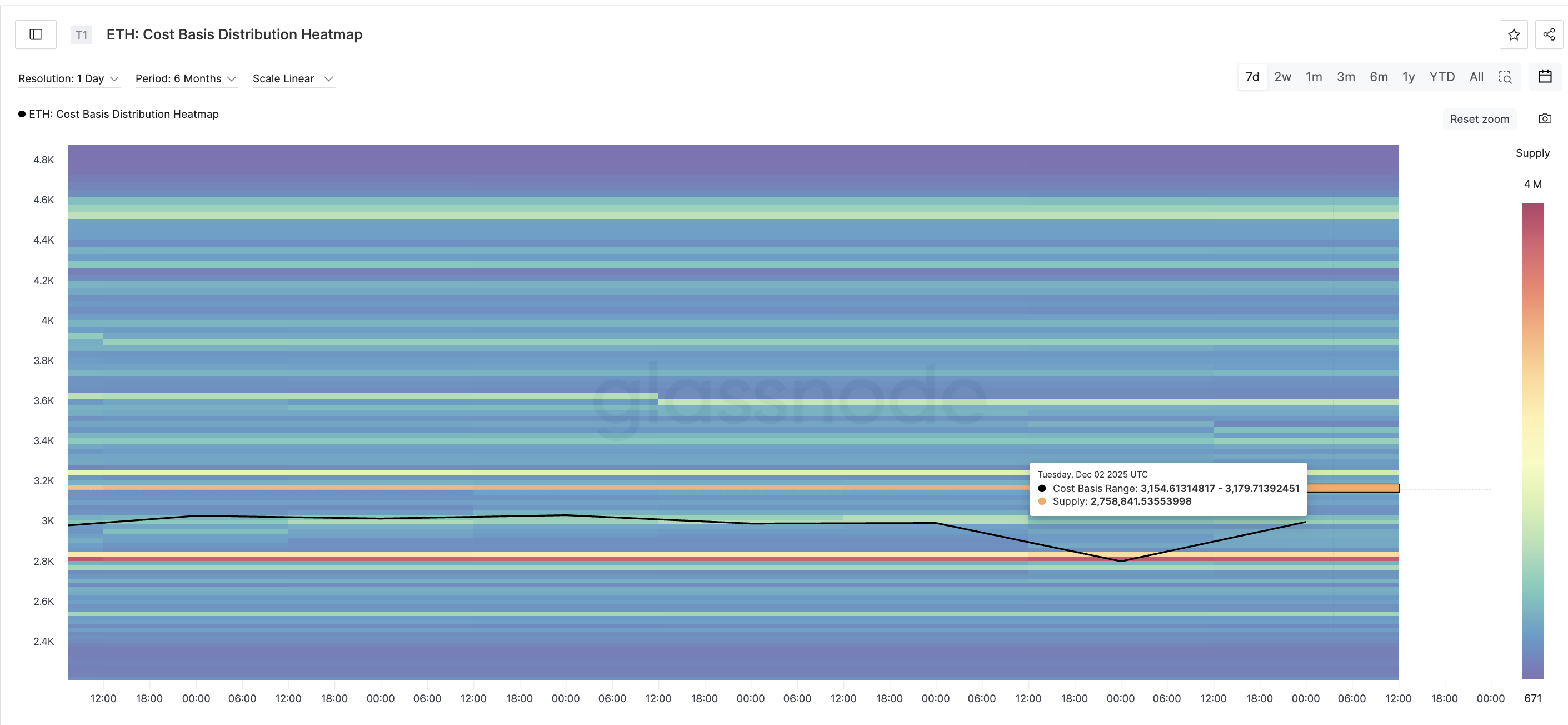
A clean daily Ethereum price candlestick above $3,166 looks like this:
sponsored
• Indicates that buyers have almost absorbed the largest supply zone.
• Room to rise towards $3,653
If the momentum reflects Pectra’s structure, a 56% increase from the December low would result in a target of around $4,262, which is also consistent with a historically strong ceiling.
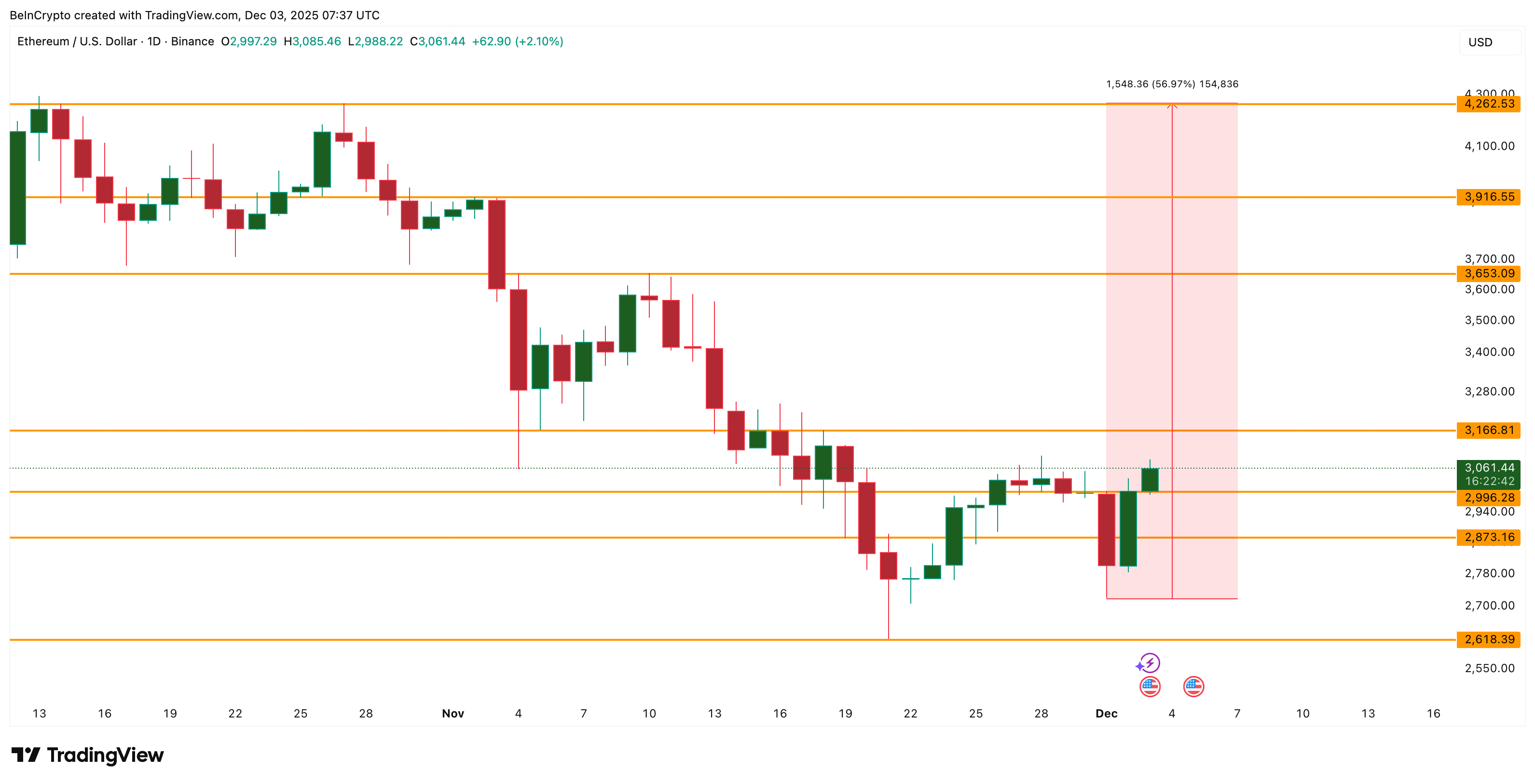
On the downside, the ETH structure weakens below $2,996. A loss of this range opens up the possibility of $2,873, and if selling pressure expands, $2,618 becomes a deeper support to watch for Ethereum price.
